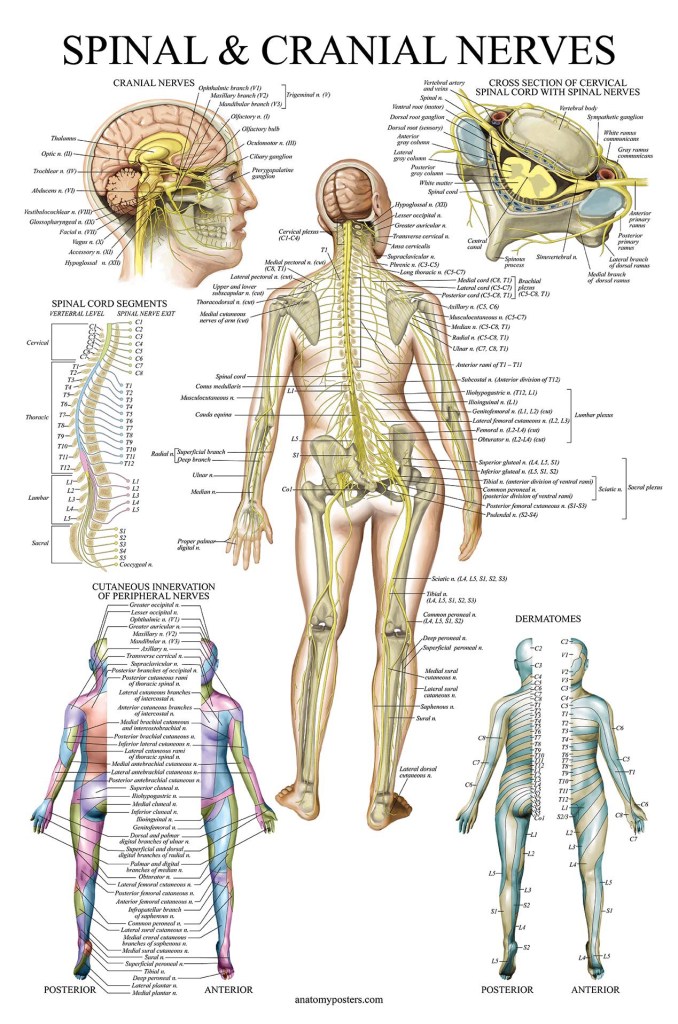
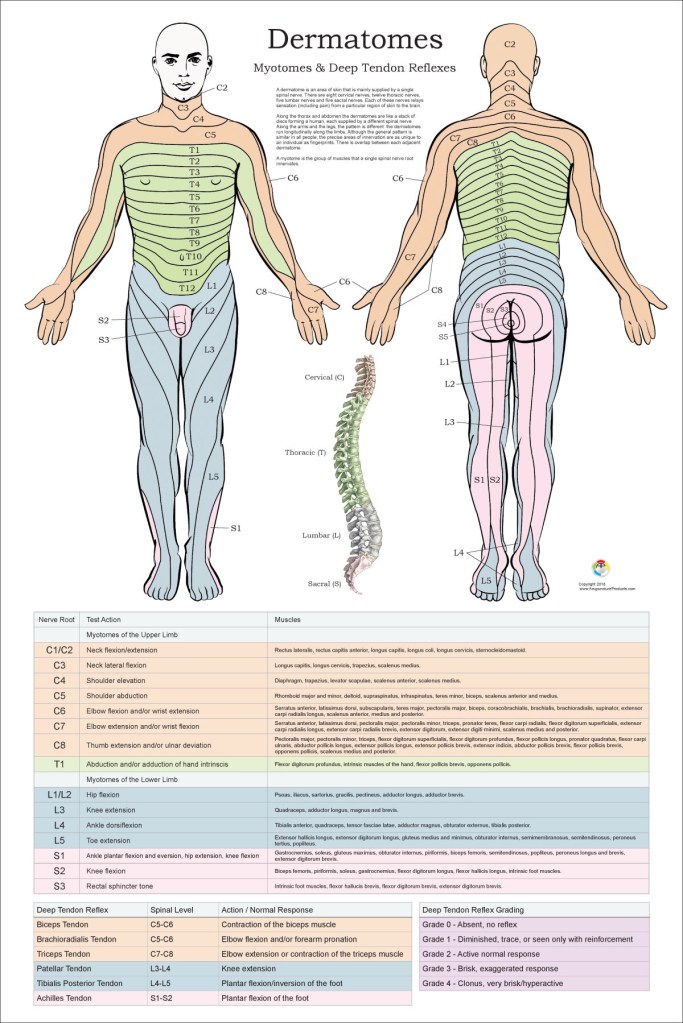
A dermatome is an area of skin that is mainly supplied by a single spinal nerve. There are 8 cervical nerves (note C1 has no dermatome), 12 thoracic nerves, 5 lumbar nerves, and 5 sacral nerves. Each of these spinal nerves relays sensation from a particular region of the skin to the brain.
Dysfunction or damage to a spinal nerve can trigger symptoms in the corresponding dermatomes. Nerve damage or dysfunction may result from infection, compression, (dis)ease, or traumatic injury to name a few.
The maps above can be used by bodyworkers, doctors, and even you! While these maps are oftentimes associated with pain, they include all sensations (pleasurable as well) – and lack thereof. This lends another dimension to the dermatome charts worth considering.
The following are examples of a few ways they are utilized. Dermatomes can aid a healthcare provider (doc, neurologist, naturopath) in detecting and diagnosing conditions or problems affecting the spine, spinal cord or spinal nerves. For bodyworkers, these maps can provide information as to where one may experience referral pain based on past injury or tensions held in particular areas of the body. When clients mention old injuries, for example, I envision the charts and work along the pathways connected to the nerve as they too were/are impacted regions. Allergic reactions and psychosomatic stress (shingles, stress induced tension, etc) can also manifest along these paths. If someone, for example, has an allergic reaction, an acupuncturist may choose to treat the nerve root at the spine associated with the area of the break out.
How might this apply to our regular daily lives? Well, going to a doctor is expensive (sometimes necessary – and sometimes there’s another path to treatment). Some may prefer to troubleshoot before doing so. This map can support that process. For instance, for anyone who experiences lack of sensation in a particular area, tingling (or numbing) in a certain zone, or even high sensitivity in specific regions, these areas of the skin can all be traced back to the intervening nerve. More information may be revealed through tracing to the root. Or not! You might find yourself returning to a site of an injury you thought was healed, or find a place in your shoulders and remember all the computer work you’ve been doing– there are many possibilities. If it seems worth a try – check out the map directly above. It explains each nerve and their function in association with a particular dermatome region. (if we are thinking on a pain scale of 1-10 and 10 is significant, this can be thought of to support those in a 1-3 zone; please always go to a doctor if in severe pain!)
Any other ways these might be useful? I’d be curious to hear ppls ideas.
(For those interested in a deeper dive, this particular site does an excellent job imo of explaining Dermatomes thoroughly and concisely.)
Cool and I mean way super cool stuff!! The body is an endlessly fascinating design!
 Body Drift Healing Arts